

Since the income statement uses accrual-based accounting, it includes expenses that may not have actually been paid for yet. Thus, net income has to be adjusted by adding back all non-cash expenses like depreciation, stock-based compensation, and others. It involves the distribution of a company’s earnings to shareholders as a return on their investment in the company, which falls under the category of financing activities in the cash flow statement.
Cash flow to net income
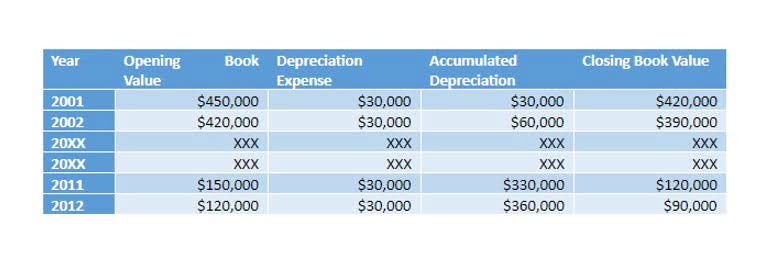
To represent actual cash, it is added back to net income in the CFO calculation. D&A is a non-cash add-back because the real cash outflow via Capex already occurred in the initial period of purchase, so the cash flow impact is positive. The income statement is reported per accounting standards established by U.S. GAAP, which has its shortcomings in reflecting the actual liquidity (i.e. cash on hand) of companies. OCF, short for “Operating Cash Flow,” refers to the net amount of cash Online Bookkeeping brought in by a company’s day-to-day operations.
How to Choose the Right Metrics for Your Needs
The second step, where we calculate the terminal value of the business, may use the FCFF with a terminal growth rate, or more commonly, we may use an exit multiple and assume the business is sold. However, remember the rule that each item included must be recurring and part of the core operations—thereby, not all non-cash items are added back (e.g., inventory write-downs). FCFE (Levered Free Cash Flow) is used in financial modeling to determine the equity value of a firm. Focus on Operating Cash Flow (OCF) to see if your core business is generating cash, and Free Cash Flow (FCF) to understand what’s left after paying for growth.
Alternative FCFF Formulas

The reason for this is that the effects of debt financing have been removed – namely, interest expense, the “tax shield” (i.e., savings from interest being tax-deductible), and principal debt repayments. A CFO can make growth investments, settle debt, pay dividends, or accumulate funds. An excellent CFO gives an organization the flexibility to implement strategic financial decisions without necessarily looking for external funding. If we enter those assumptions into the OCF formula under the indirect method, we arrive at $45 million as our illustrative company’s OCF. An increase in NWC reflects that there is more cash tied up in operations; thereby the cash flow decreases (i.e. a “use” of cash).
Formula E announces Max Adkins as new Chief Financial Officer
In short, the greater the variance between a company operating cash flow (OCF) and recorded net income, the more its financial statements (and operating results) are impacted by accrual accounting. The formula to calculate operating cash flow (OCF) adjusts net income by non-cash items like depreciation and amortization, and then the change in net working capital (NWC). Hence, the cash flow statement (CFS) is necessary to understand the real cash inflows / (outflows) from operating, investing, and financing activities. Operating Cash Flow (OCF) measures the net cash generated from the core operations of a company within a specified time period.
- Part of the two-step DCF Model is to calculate the FCFF for projected years.
- The main reason why a company exists is to earn revenue and create shareholder revenue.
- If it is higher, the company generates more cash than it needs to pay off current liabilities.
- It’s the clearest indicator of whether your core operations are bringing in enough money to keep things running.
- We then subtract any changes to CAPEX, in this case, 15,000, and get to a subtotal of 28,031.
Operating cash flow is essential as it analyses the economic progress of a company’s core business activities. In addition, it determines the money generated by the regular business work. Below is a cfo formula break down of subject weightings in the FMVA® financial analyst program. As you can see there is a heavy focus on financial modeling, finance, Excel, business valuation, budgeting/forecasting, PowerPoint presentations, accounting and business strategy.

Operating Cash Flow Calculator (OCF)
Using CFO in ratios provide analysis critical to making good investment decisions. Net income would be equivalent to CFO if net income were just comprised of cash revenue and cash expenses. Typically, D&A is embedded within COGS/OpEx on the income statement, which reduces taxable income and thus net income. Non-cash add-backs increase cash flow as income statement they are not actual outflows of cash, but rather accounting conventions.
- Instead of wasting hours setting up spreadsheets, Wisesheets lets you pull all their metrics into one place.
- The depreciation and amortization expense, or “D&A”, is embedded within COGS and operating expense section.
- Suppose we’re tasked with calculating a company’s operating cash flow (OCF) in a given period with the following financial data.
- That said, the funds from operations (FFO) metric is a practical method to estimate the capacity of a REIT to maintain, or perhaps raise, its current payout of cash dividends.
- This cash flow can contribute to discretionary free cash flow, which may be allocated to shareholder returns, financing deals, or capital expenditures.
- Knowing a company’s free cash flow enables management to decide on future ventures that would improve shareholder value.
- FCFF, or Free Cash Flow to Firm, is the cash flow available to all funding providers (debt holders, preferred stockholders, common stockholders, convertible bond investors, etc.).
- This step takes into account whether cash collections or payments happen before or after recognizing revenues or accruing an expense.
- Additionally, the impact of changes in working capital and other non-cash expenses can make it even more different.
- But in the latter case with negative OCF, the company must seek external financing sources to meet its reinvestment spending needs, e.g. via equity and debt issuances.
Investors greatly consider FCF compared to other measures, because it also serves as an important basis for stock pricing and the ability to service debt. A company can improve its operation ratio by increasing its revenue, reducing operating expenses, efficiently managing its working capital, and optimizing its cash flow management process. A good cash flow from operations ratio varies depending on the industry and company. Generally, a ratio greater than 1 indicates the company has positive cash flow from operations, while less than 1 shows negative cash flow.